It is important that your dog gets a balanced diet of carbohydrates, protein, and fats to maintain good general health as well as a healthy skin and coat, and
maintains a good level of energy. Your dog’s unique nutritional requirements will depend on its size, its breed, and its stage in life, among other factors. General
diet guidelines are as follows: 20-25% protein, 20-35% fat and 40-60% carbohydrate. Like us, they need vitamins and minerals, but unlike us they don't have the
option to add variety to their meals that would allow them to get more of the vitamins and minerals they need to stay healthy.
 Feeding your dog lean meat alone does not satisfy these guidelines. In nature, dogs would typically eat all of their prey, which would provide more of the nutrients
they need. Since being domesticated, dogs typically don't receive all the nutrition they need because they are not required to hunt their prey nor have the ability
to eat the different types of foods that would innately provide these essential nutrients. Feeding your dog lean meat alone does not satisfy these guidelines. In nature, dogs would typically eat all of their prey, which would provide more of the nutrients
they need. Since being domesticated, dogs typically don't receive all the nutrition they need because they are not required to hunt their prey nor have the ability
to eat the different types of foods that would innately provide these essential nutrients.
Following is a breakdown of the normal dietary requirement:
Proteins and Amino Acids
Dogs must have protein in their diets, they cannot live without it. Dietary protein contains 10 specific amino acids that dogs cannot make on their own. Known as
essential amino acids, they provide the building blocks for many important biologically active compounds and proteins.
Fats and Fatty Acids
Dietary fats, mainly derived from animal fats and the seed oils of various plants, provide the most concentrated source of energy in the diet. They supply essential fatty acids that cannot be synthesized in the body and serve as carriers for important fat-soluble vitamins. Fatty acids play a role in cell structure and function.
Food fats tend to enhance the taste and texture of the dog’s food as well.
Carbohydrates
Dogs need a certain amount of energy to maintain the normal activities of their daily lives. Dogs get some of their energy from carbohydrates which include sugars, starches and dietary fibers.
Because of the decreased physical activities of older dogs and a slower metabolism, older dogs need typically twenty percent fewer calories than middle aged dogs.
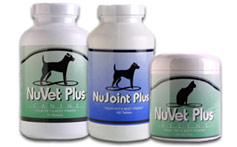
The fact that adult dogs tend to get less exercise and less meal variety, lend them to be deficient in certain necessary vitamins and minerals. A good way to ensure that they are receiving the vitamins and nutrients they need is to provide them with a good quality vitamin supplement like NuVet Plus. This will ensure your dog has the best chance of living the longest, healthiest life possible.
We’d like to suggest the NuVet Plus line of supplements.
Based upon our own research and personal experience, we’ve come to believe that NuVet Plus is the finest line of dog vitamin supplements available. So much so that NuVet is the ONLY supplement brand we endorse.
We’re not exactly alone in that opinion. NuVet is used by many of the world’s top dog breeders and groomers. And in 2009, readers of the world’s most widely read magazine for dog lovers, Dog Fancy, voted NuVet the best pet supplement.
Click Here to read accounts of many pet owners who have made their pets’ lives healthier and happier with the help of NuVet.
Click here to order NuVet and start your
dog on a path to a longer, healthier life!
To learn more about the ingredients that NuVet uses and the benefits of each, please follow this link. NuVet Dog Vitamin Supplement Ingredients
Dear NuVet,
All I can say is that I am so thankful that I tried your product. I have an 8 month old German Shepherd-Rottweiler pup named Mishka. He is absolutely gorgeous and radiant and I know this can only be attributed to NuVet. Many of our neighbors have young dogs too but none of them are as alert, vibrant, and outwardly healthy like my dog. All our neighbors comment on how gorgeous his coat is and how alert and active he is.
NuVet is a fantastic product. I am sold for life.
Kakoli M.
New York
What specific vitamins should a quality dog vitamin supplement contain?
Fact) A quality canine vitamin supplement should contain the following specific vitamins:
Vitamin A - Vitamin A is essential in skeletal growth, proper eye function, healthy skin and mucous membranes. Vitamin A is also the body's first line of defense against invading microorganisms and toxins. It promotes a healthy immune system, destroys carcinogens (cancer causing agents), and guards against heart disease and stroke.
Vitamin B (Complex) - Helps the functioning of the nervous system; maintains muscle tone in the gastrointestinal tract; maintains the health of skin, coat, eyes, mouth and liver.
Vitamin B1 (Thiamine) - Essential for normal functioning of the heart, nerves, muscles, skin and digestive system.
Vitamin B2 (Riboflavin) - Necessary for carbohydrate-fat-protein metabolism, and antibody and red blood cell formation. Good for healthy eyes, skin, and coat.
Vitamin B3 (Niacin) - Promotes growth, proper functioning of the nervous system, maintenance of healthy skin, tongue, digestive system, and carbohydrate-fat-protein metabolism.
Vitamin B5 - canine healthAssists in the release of energy from carbohydrates, fats, and proteins. Aids in the utilization of some vitamins, stimulates growth, and aids in the formation of antibodies.
Vitamin B6 - Necessary for carbohydrate-fat-protein metabolism, antibody and red blood cell formation, and aids in digestion.
Vitamin B12 - Essential for normal formation of red blood cells, carbohydrate-fat-protein metabolism, and good appetite.
Vitamin C (Ester C™) - Vitamin C is a key factor in many immune functions, including white blood cell function and Interferon levels. Due to its antioxidant properties, it combats the effects of free radicals while lowering the risk of cataracts and promoting cell growth and tissue repair.
Vitamin E - Vitamin E is the most effective chain breaking lipid-soluble antioxidant in the biological membrane. It contributes to membrane activity, protecting critical cellular structures against damage from oxygen free radicals.
After researching and trying the many dog vitamins available on the market today, we believe NuVet Plus is the best canine or dog vitamin supplement available on the market today. We rarely feel strongly enough about any particular product to give it our endorsement.
After all, the main purpose of our site is to help you find out the facts about dog vitamins so you will be better equipped to properly care for your dogs to ensure their health and longevity. In this case, however, seeing the remarkable results of this amazing dog vitamin supplement in the lives of our own dogs has caused us to make our first endorsement. But don’t just take my word for it, CLICK HERE to read these incredible NuVet success stories.
Click here to order NuVet and start your
dog on a path to a longer, healthier life!
|